

How AI Can Help Project Teams Spot Delivery Issues Earlier
Connecting reports, requests and dependencies so emerging issues reach the people who can act while options remain available.
In this article
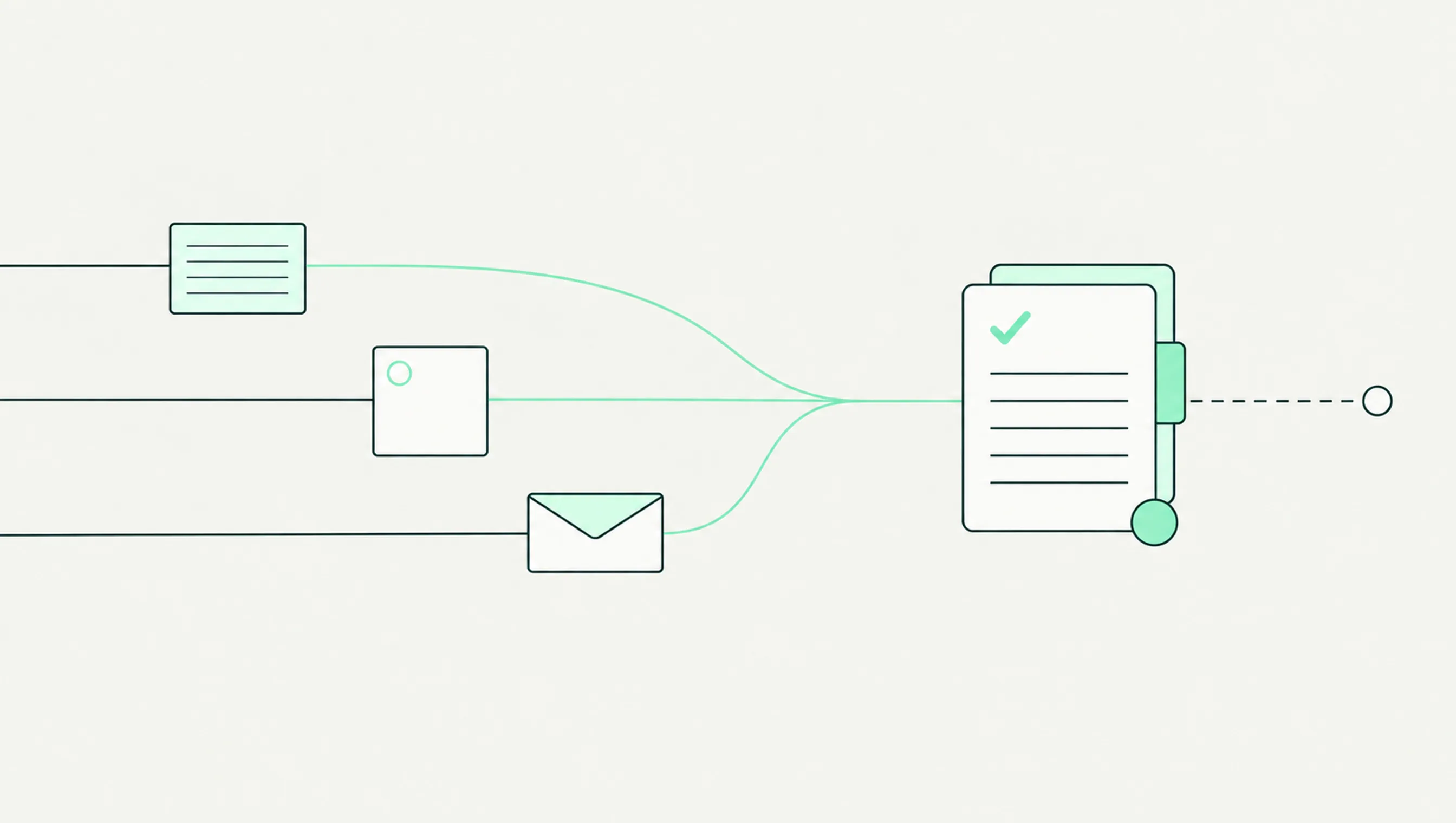
A delivery issue can appear in several places before it reaches the project review. A supplier revises a date, a request for information remains unanswered and a progress report records work that has not started. Individually, each item may look manageable. Together, they may require a decision.
AI can help assemble these signals and prepare them for review. The value lies in shortening the distance between information being recorded and a responsible person understanding what needs attention.
That requires a reliable connection to the project's records, a clear distinction between reported facts and inferred implications, and an operating rhythm that turns a flagged issue into a decision.
Key takeaways
- Connect documented changes with the affected activities and owners, while making uncertainty and data freshness visible.
- Use AI to prepare issue briefs; confirm schedule and cost implications through the project’s established controls.
- Measure earlier detection, useful interventions and alert quality before claiming reductions in delay or overruns.
1. Focus on the Decisions That Arrive Too Late
Start by identifying recurring decisions that lose value when delayed. Examples include resolving a design question before procurement, confirming access before mobilisation or agreeing a response to a revised delivery date.
Define the decision and the evidence needed to make it. A dashboard showing hundreds of open items may be less useful than a short brief explaining which unresolved request could affect an upcoming procurement commitment.
The project lead should also identify who can act. Surfacing an issue earlier has limited effect if the responsible person lacks authority, resources or a clear route to obtain a decision.
2. Establish a Common Reference for Project Information
Reports and correspondence need to connect to the same project, package, activity or location. Without that reference, AI may link items that sound similar but concern different parts of the work.
Begin with the identifiers already used in the project's document, programme and commercial systems. Map recurring variations deliberately, and route uncertain matches for review. Preserve the date and source of each reported event.
The distinction between a baseline and a forecast also matters. The approved programme, the current forecast and an informal supplier estimate describe different things. Each should remain visible in the issue brief.
Data coverage must be explicit. If the system can read meeting minutes and the RFI register but cannot access procurement updates, it should not present a complete view of delivery readiness. Missing information is itself useful context for the reviewer.
3. Prepare Evidence-Based Issue Briefs
An issue brief should describe the observed change, the records that support it, the potentially affected work and the next decision required. It should also distinguish confirmed relationships from connections that still need validation.
Consider a supplier email advising a later delivery date for a specified package. The system can compare that date with the recorded need date and identify a related open design request. The planner and package manager then confirm whether the records describe the same dependency and what action is appropriate.
Exhibit 1. A proposed delivery issue brief
| Component | Example content |
|---|---|
| Observed change | Supplier reports a revised delivery date for the identified package. |
| Supporting evidence | Dated email, current procurement record and relevant programme extract. |
| Possible implication | Reported delivery may occur after the recorded need date; dependency requires confirmation. |
| Open question | Is an alternative sequence or supply arrangement feasible? |
| Decision owner | Named package manager, supported by the planner and commercial team as required. |
| Review date | The date by which a response is needed to preserve the available options. |
Illustrative scenario. It does not establish critical-path delay, entitlement or a cost impact.
A concise brief should allow the recipient to investigate immediately. An alert that only says “high risk” transfers the work of understanding the issue back to the team.
4. Distinguish Monitoring from Forecasting
Monitoring identifies what the records currently show. Forecasting estimates what may happen next. Both can be useful, but they require different evidence and should be labelled accordingly.
A system can flag an overdue response or a changed date using recorded information. Estimating the resulting completion impact requires the relevant dependencies, calendars, resources and assumptions to be represented correctly in the planning process.
AI may help prepare inputs or explain a scenario, while approved planning and cost tools perform the analysis. The team should retain the assumptions and the version of the programme used. A plausible narrative is not a substitute for that work.
The same distinction applies to technical and safety matters. A document flag can prompt specialist review; it does not authorise a design change or certify that an activity is safe to proceed. Route the information through the project's established responsibilities.
5. Build a Review Rhythm That Leads to Action
Agree on which issues need immediate escalation and which belong in the next planned review. The threshold should reflect the decision's urgency and consequence, rather than the volume of messages the system can generate.
Assign every accepted issue an owner, a next action and a review date. Record why the team dismisses a flag so recurring false alerts can be investigated. Keep unresolved issues visible until their status has been confirmed.
Exhibit 2. From a flag to a recorded outcome
| Review outcome | What should happen next |
|---|---|
| Evidence confirms an issue | Assign the decision and response actions. |
| Information is incomplete | Request the missing evidence and set a follow-up date. |
| The apparent issue is a false match | Correct the link and review similar alerts. |
| The issue is resolved | Record the resolution and supporting evidence. |
| A wider change is proposed | Use the established change-control and approval process. |
Proposed coordination workflow; it does not replace project governance or contractual procedures.
The review should close the information loop. A decision taken in a meeting needs to update the relevant action record so the system does not continue raising an issue that has already been addressed.
6. Test Usefulness on a Defined Project Area
Choose one package or recurring issue type with sufficient records to evaluate. Historical cases can help test whether the approach would have surfaced useful evidence, provided only information available at the relevant time is used.
During a live pilot, measure the time between a recorded signal and review, the proportion of alerts judged useful, and the effort spent investigating false positives. Also assess known issues the system failed to surface.
Record interventions and their rationale. This creates evidence about how the information changed a decision. It does not automatically establish that the system prevented a delay: the outcome may depend on subsequent actions and other project events.
Compare data freshness and coverage throughout the pilot. A change in reporting practice may explain an apparent improvement in detection more than a change in the model itself.
7. Make Earlier Information Part of Delivery Management
The strongest use of AI in this setting is a repeatable way to prepare the issues that deserve attention. That capability depends on the quality of project records and the team's willingness to respond when the evidence changes.
Expand only when the initial scope produces useful information at a manageable review cost. New packages may use different identifiers, suppliers and reporting practices, so their connections need to be checked before relying on the output.
Project leaders should judge the result by the decisions it supports. Earlier visibility creates value when it gives the team a practical opportunity to clarify, replan or escalate. The system's contribution is to help that opportunity arrive with the evidence attached.
Identify an Earlier Decision Point
Bring a recurring delivery issue or reporting handoff to a discovery conversation with SENNSE. We can explore the available records, decision ownership and a focused way to test whether AI improves the timing and quality of review.
An AI-Assisted Project Dashboard for Property Developers
Construction & Artificial Intelligence · Sep 11, 2026
From Tender Documents to a Review-Ready Bid: Where AI Can Help
Construction & Artificial Intelligence · Aug 20, 2026

Beyond the Renewal Reminder
Insurance & Artificial Intelligence · Sep 14, 2026