

AI In Construction, Built Around The Estimator's Call
Give engineering firms, builders and contractors the capacity to keep up with tenders, variations and correspondence, with every call left to the estimator or the engineer and every action on the record.

AI You Can Put In Front Of The Board
Built for the questions a client, an auditor and your own board will ask, from the first sprint to the quarterly report.
Baseline before build
We time a sample of real cases, map the systems and fix the benchmark in writing before anything is built. After go-live the result is measured against it, so the board paper carries a number the CFO can check.
Governance is a deliverable
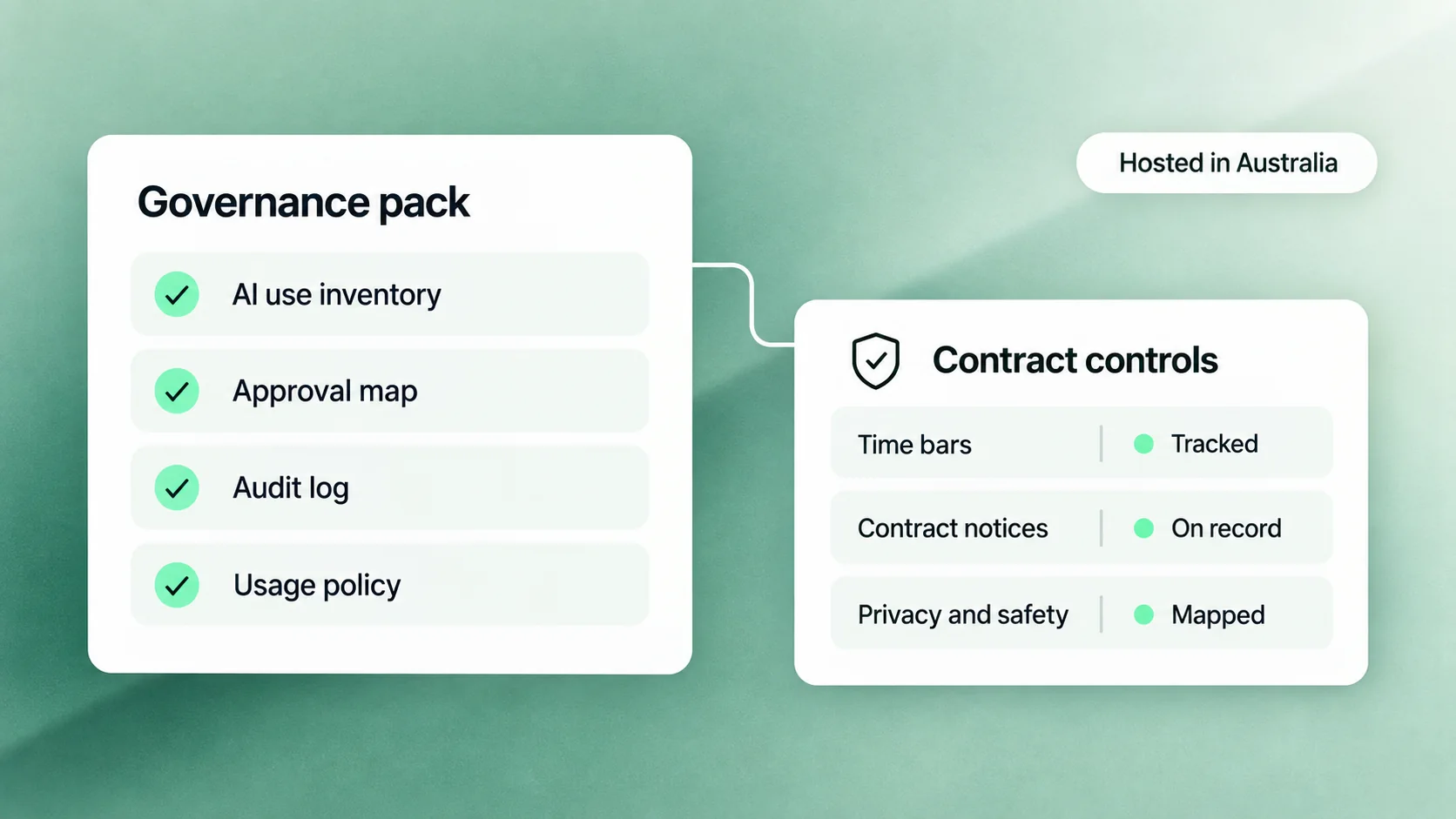
Every build comes with the paperwork your compliance and risk people need: where AI is used, who approves what, the audit log and a usage policy they can sign.
Built inside the systems you run
Nothing moves to a new platform. We build around the estimating package, project management system, document control and mailbox you already run. The AI writes back through them with every action on the record.
Built For Engineers, Builders And Contractors
Four kinds of firm, one method. The paperwork is automated inside the systems each already runs and the call stays with the estimator or the engineer.
Engineering firms
Consultancies where the hours go on tender documents, RFIs and design correspondence rather than the engineering.
Builders
Head contractors with variations, claims and progress reports to get out on time, every month.
Contractors and subcontractors
Trades with tenders to price, claims to lodge and correspondence to keep on the record.
Project and cost managers
Teams reconciling programmes, budgets and claims across many parties, with the sign-off staying with them.
Transform How The Operation Runs
Capacity, governance and connection. Three things that change, in the order they usually happen.
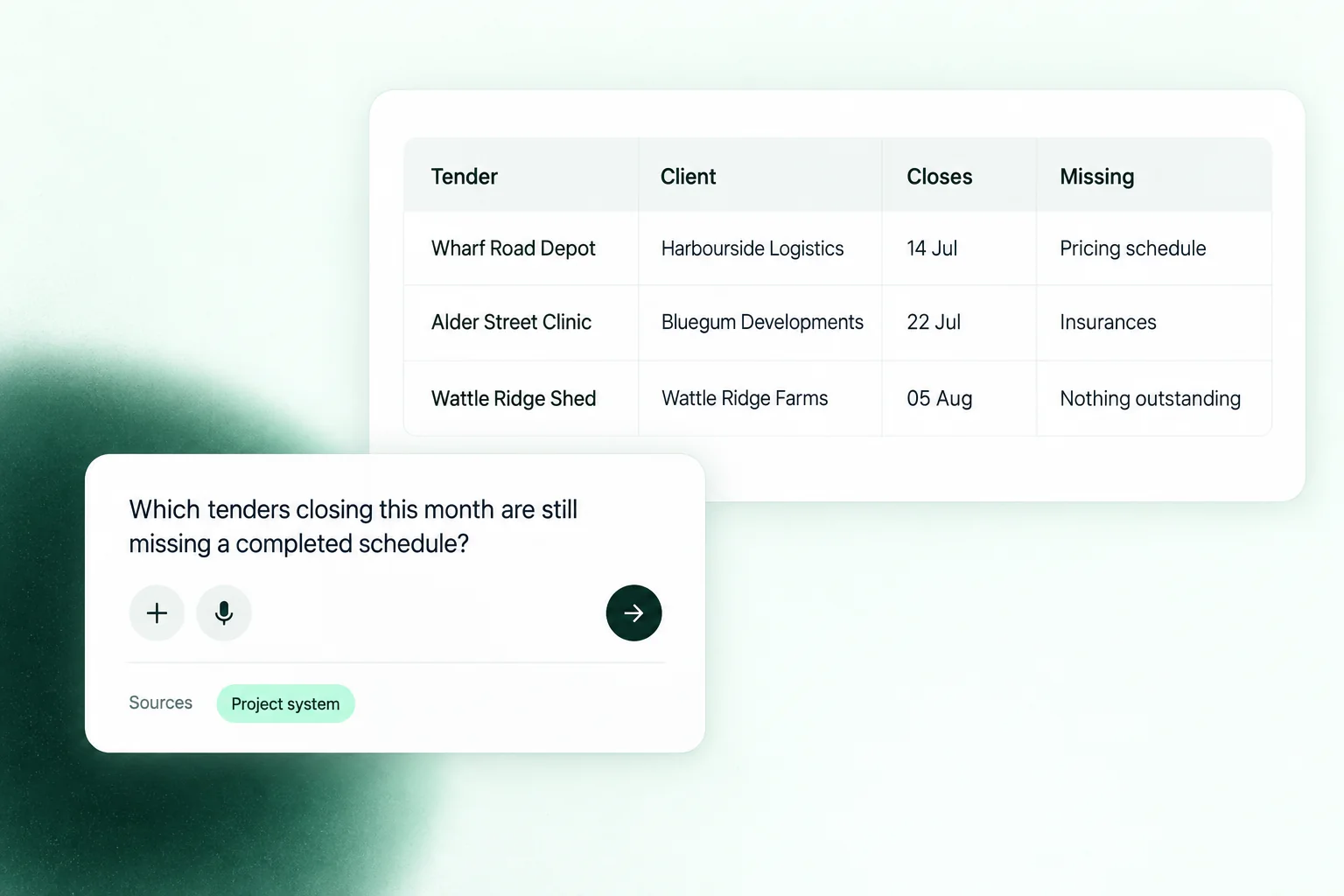
Increase capacity across the project
The AI drafts, checks and holds tender packs, variations, RFIs and progress claims for approval, so estimators and engineers spend their day on the price and the design.
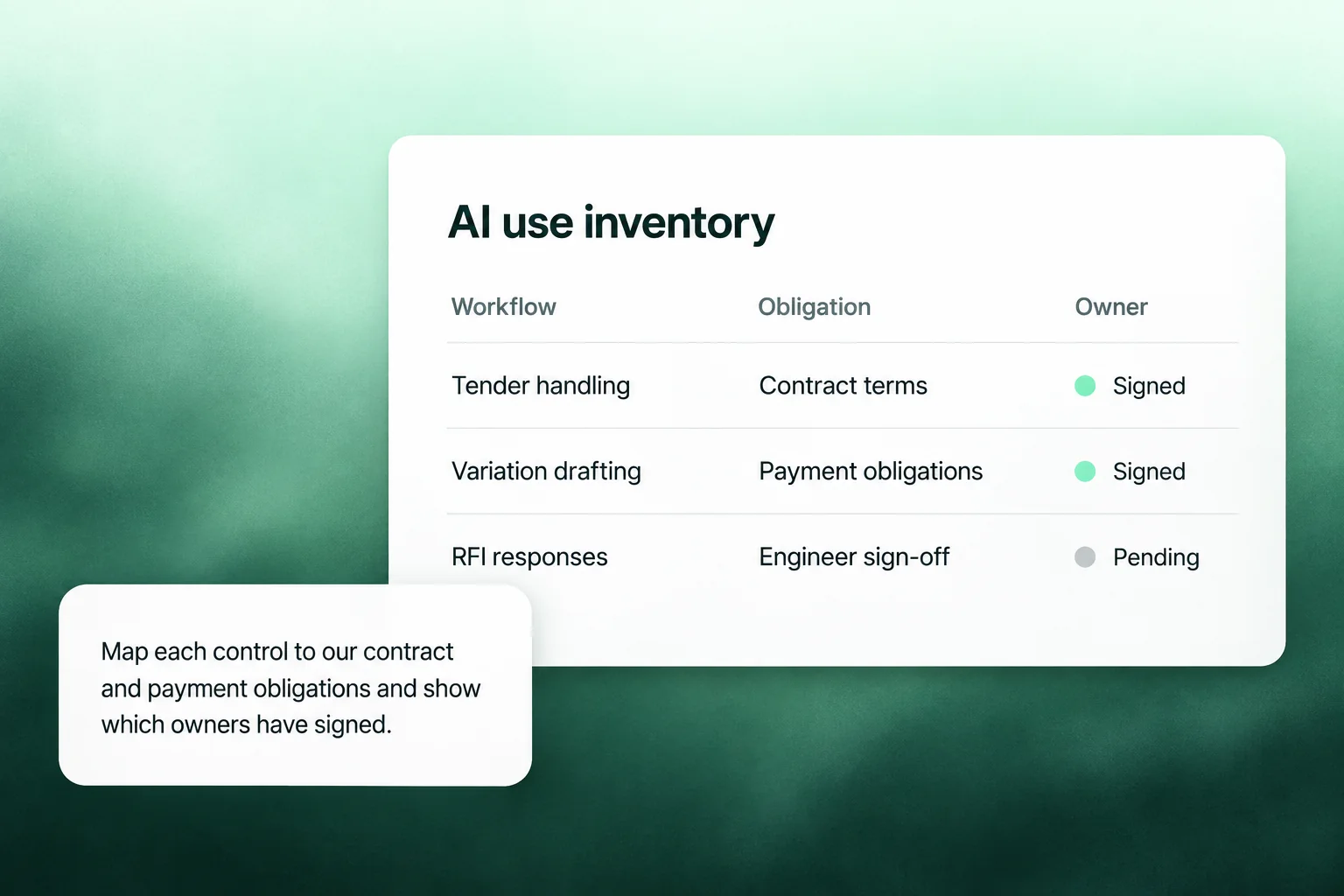
Govern your AI systems
We keep an inventory of every AI use, map each control to the standard it answers and report every quarter, so the board and the regulator get the same answer.
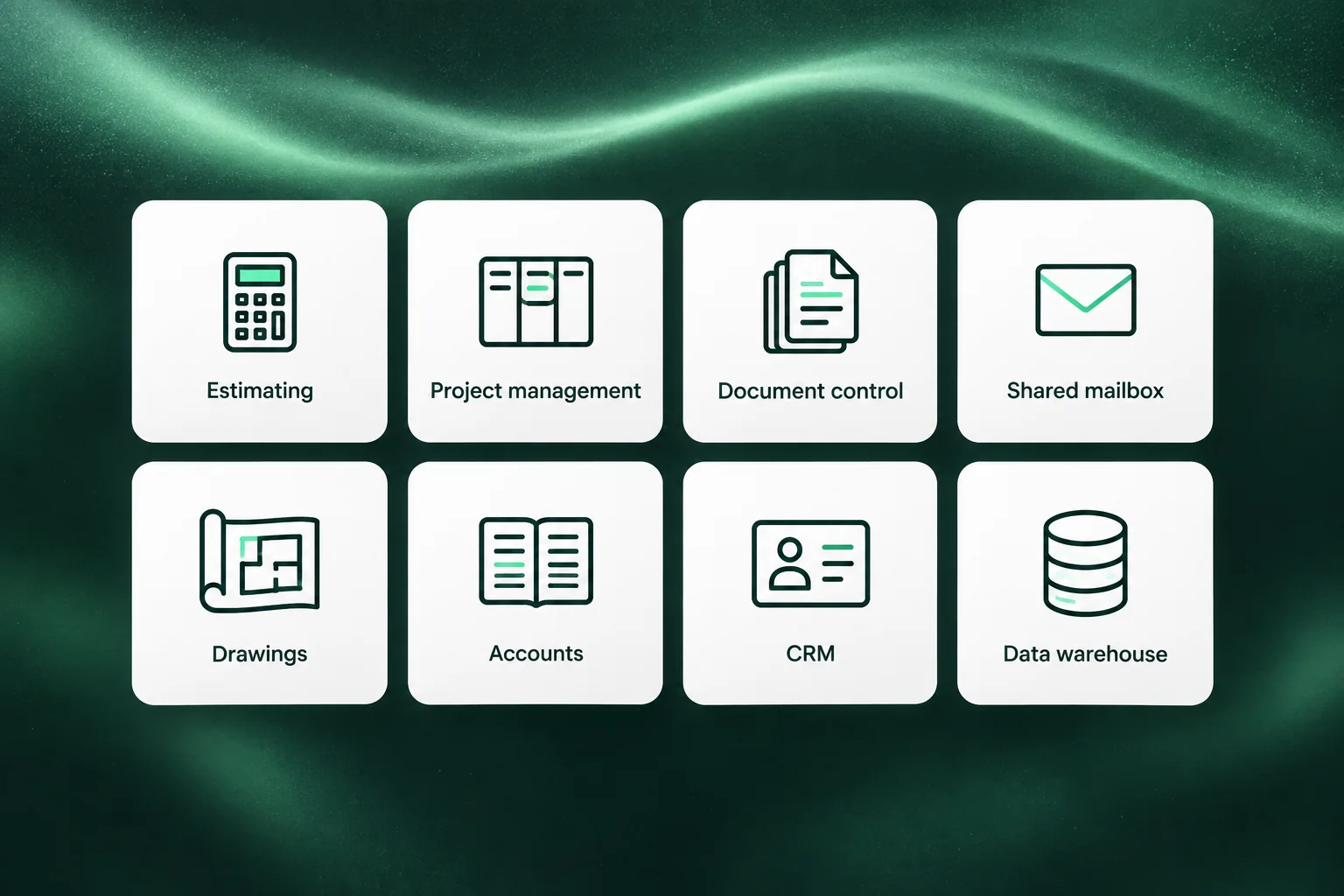
Connect your project systems
Your estimating package, project system and document control stay where they are. The AI reads from them and writes back with an audit trail. Nobody learns a new platform.
High-Impact Use Cases For Construction
The workflows we automate inside engineering firms, builders, contractors and project teams. The AI does the paperwork. The estimator and the engineer make the calls.
We read the addenda, schedules and conditions, build the checklist and draft the returnable schedules from your last comparable bid. The estimator's time goes on the price and the price stays theirs.
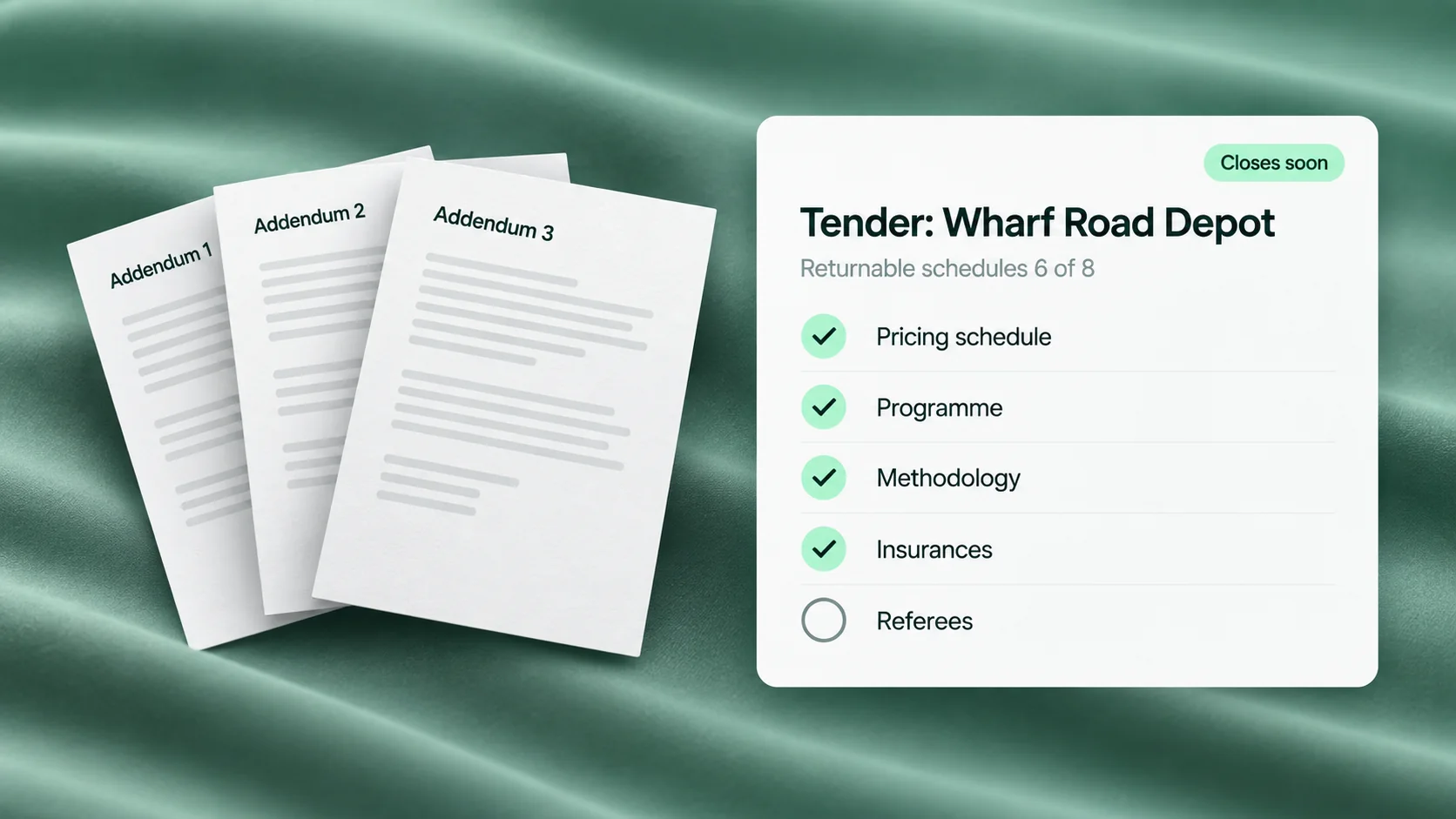
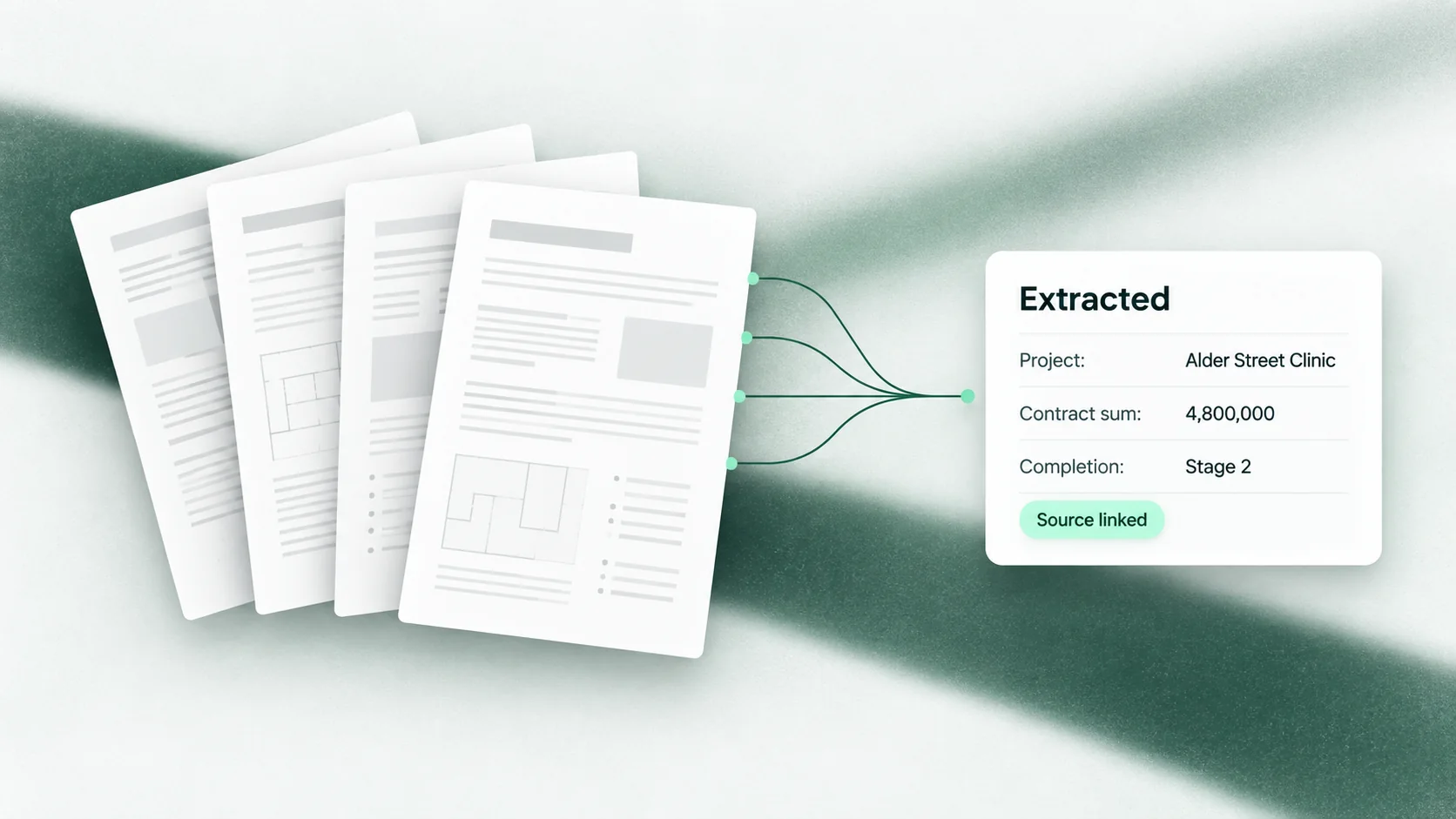
We read specifications, drawing registers and correspondence, summarise them and check they are complete. The facts land in your own templates with a link back to the source. A person reviews before anything leaves.
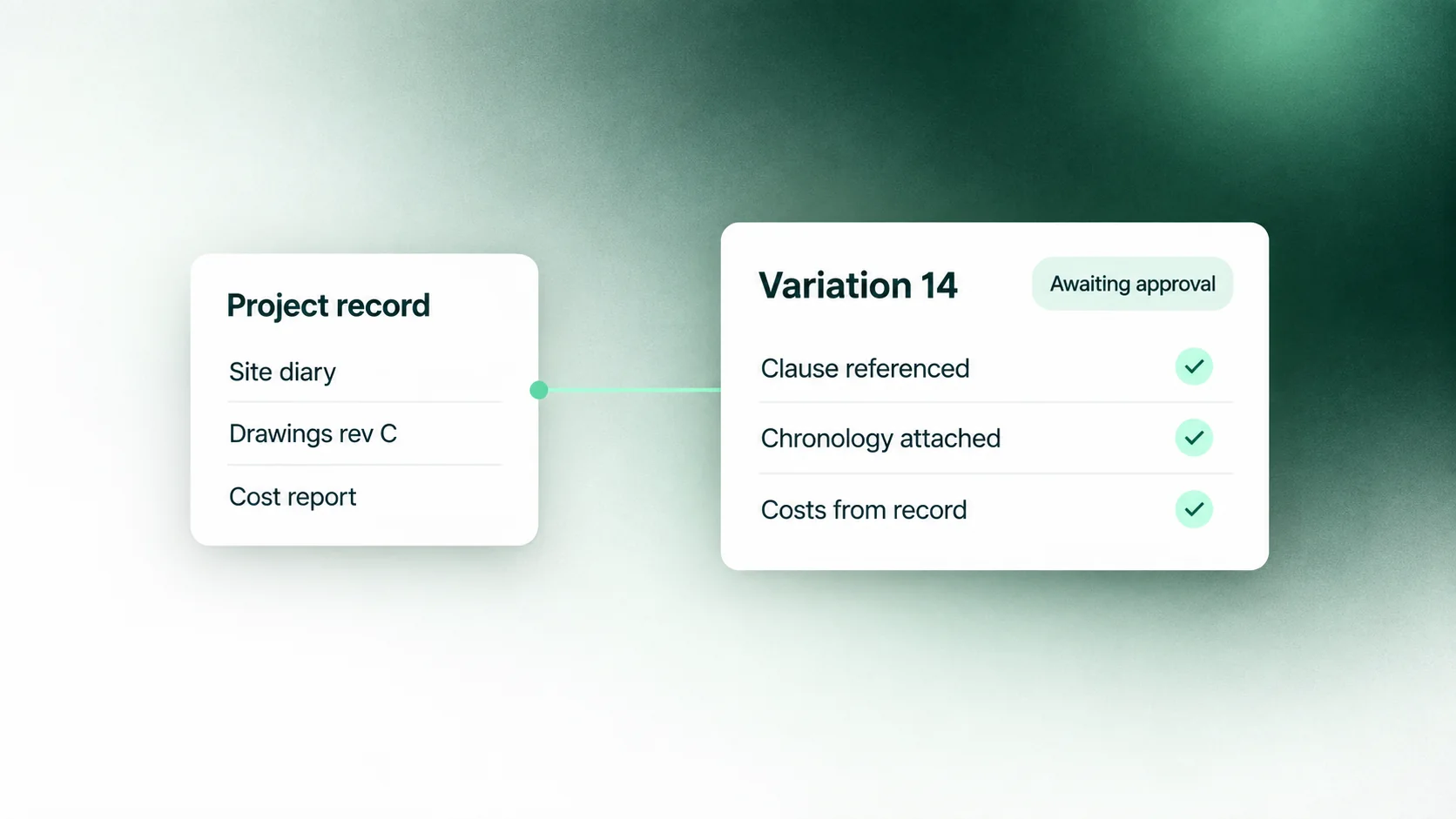
We draft the notice with the clause, the chronology and the costs pulled from the record, for the contract administrator to review and issue inside the time bar. Nothing goes out unapproved.
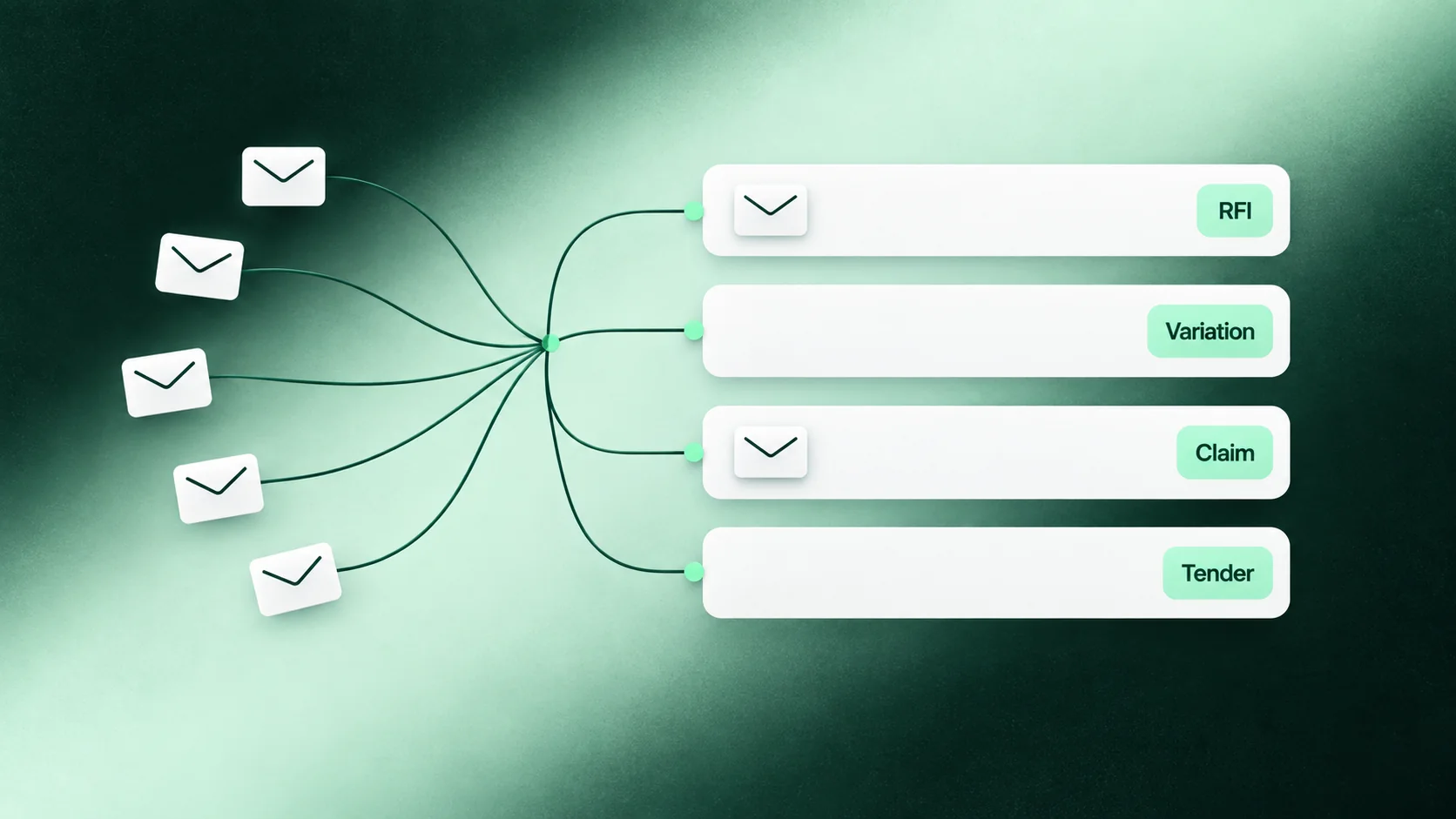
We sort the project mailbox by intent, pull out the key fields, route each item to the right register and draft a reply where one makes sense. A person reads every draft before it goes anywhere.
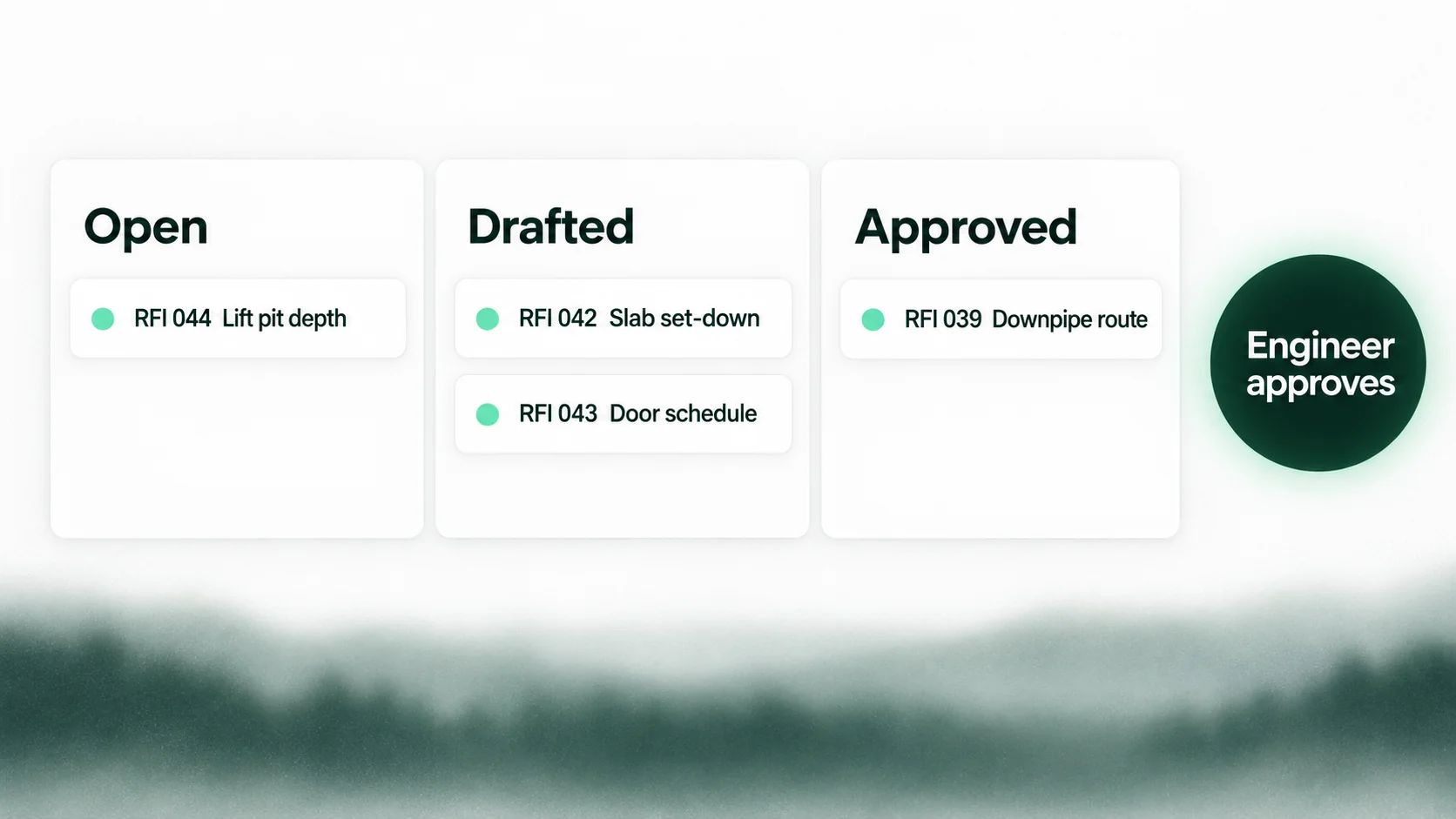
We log each RFI, draft the answer from the drawings and the specification, keep the register current and the chronology on the record. The engineer approves every response.
Project and personal information stays in Australia, with access limited to the people who need it and every action on record. Each build ships with the governance pack a client or an auditor will ask for, designed around the contract and payment obligations that decide whether a claim stands up and the privacy and safety rules on site.
How We Help Construction And Engineering
Engineering firms and builders win on the price and the design. They lose weeks to the paperwork around them. Tenders, variations, RFIs and claims grow faster than the people who handle them.
The answer is to apply AI to that paperwork in the right order, with the record a contract and a client demand. We combine AI engineering with people who have worked inside the industry and turn it into workflows an estimator trusts. The levers we pull:
Value creation. We find the tenders, variations and correspondence where AI returns the most hours for the least disruption, put a measured number on each before anything is built and prove it against your own baseline after.
Client-centric journeys. We redesign the tender, variation and RFI journeys from the client's side, so responses go out faster, on the record and inside the time bar.
Downcycle management. When margins tighten and the pipeline thins, we deliver capacity without headcount. The paperwork is automated first, so the same team bids and delivers more.
Data analytics and AI. Progress, claims and workload answered in plain language from the systems you already run, with every call kept with the estimator or the engineer.
Agile ways of working. We work in short sprints with your own people, shipping one workflow at a time and measuring each, so the operation changes at a pace it can absorb.
Industry experts. Our team has worked alongside builders, engineers and estimators and knows how a project actually runs. We bring that operating knowledge to every engagement, from the first briefing to the quarterly report.
Reading For Construction Leaders
Field notes, regulatory guides and workflow write-ups, grouped by the company type they were written for.
Frequently Asked Questions
The questions construction and engineering leaders ask first, answered in a sentence.
Mostly on the paperwork. Tender packs, variations, RFIs and the shared inbox. The good implementations keep the estimator and the engineer on every price and every notice. That is where the hours come back.
No. It reads, checks, drafts and keeps the record. The price, the certification and the notice carry a person's name and they stay with that person.
It stays in your environment, hosted in Australia. It is never used to train a model. Access is limited to the people who need it and every action is logged, so you can see exactly what happened and when.
No. We build around what you already run, whether that is your estimating package, project management system or document control. The AI reads from them and writes back through the proper channels.
The AI tracks the dates and drafts the notice with the clause and the record behind it. A person reviews it and issues it. Nothing goes out unapproved and nothing is missed for want of a reminder.
With an executive briefing. Sixty to ninety minutes with your leadership team, working through a demonstration on your own tenders. No cost and no obligation. If it makes sense, we scope a baseline sprint from there.